DISCLAIMER: CFDs are complex instruments and come with a high risk of losing money rapidly due to leverage. 80% of retail investor accounts lose money when trading CFDs with this provider. You should consider whether you understand how CFDs work and whether you can afford to take the high risk of losing your money.
Effortlessly calculate the figures behind your trades with our comprehensive suite of calculators. Whether you need to determine pip values, margin requirements, swaps, or commissions, our tools provide you with quick and precise results.
This enables you to strategize and plan every trade like a professional.
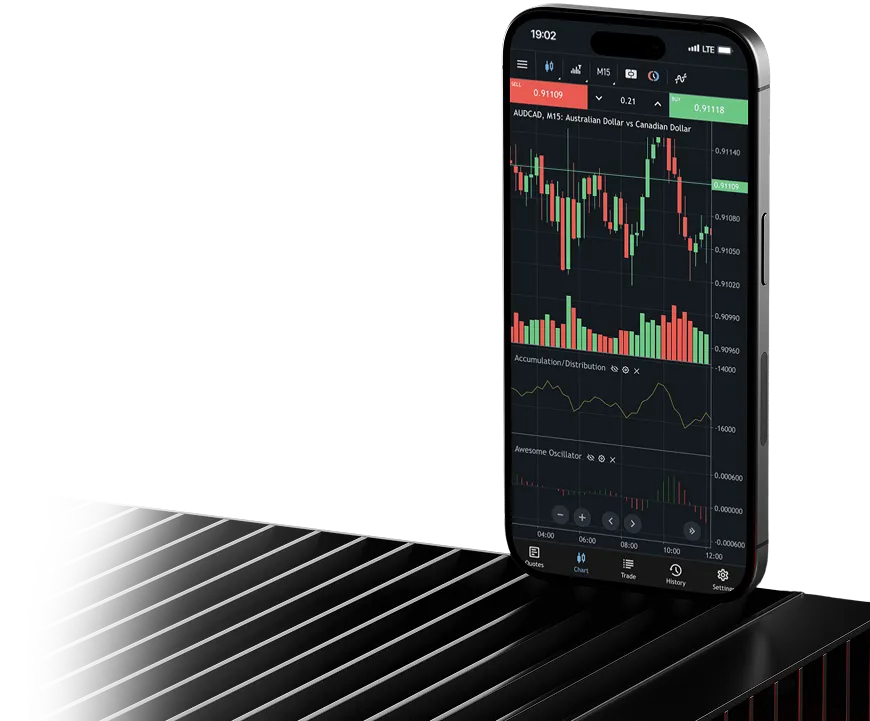
Full-featured trading on the go with real-time sync.
Coming Soon
Most Frequent Questions (FAQ)
CFD trading involves predicting the direction of an asset's price. Traders can go long (buy) if they believe the price will rise or short (sell) if they expect it to fall. Profits or losses are realized based on the difference between the opening and closing prices of the contract.
Advantages of trading CFDs include access to a wide variety of markets, the ability to trade on margin (leverage), opportunities to profit in both rising and falling markets, and no requirement for ownership of physical assets.
Risks include the potential for significant financial losses due to leverage, market volatility, and liquidity risks. Additionally, because CFDs are complex financial products, traders may experience rapid changes in their account balances.
Risks include the potential for significant financial losses due to leverage, market volatility, and liquidity risks. Additionally, because CFDs are complex financial products, traders may experience rapid changes in their account balances.
Yes, CFDs can be traded on a wide range of assets, including stocks, indices, commodities, currencies, and cryptocurrencies. The availability of specific CFDs depends on the broker and their offerings.
Leverage in CFD trading allows traders to control a larger position with a smaller amount of capital. For example, a leverage ratio of 100:1 means that for every $1 in the trader's account, they can control $100 in the market. While leverage can amplify profits, it also increases the risk of losses.

 EURUSD